
What Is a Wire Harness Assembly?
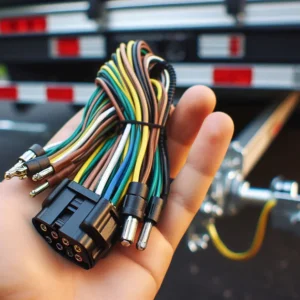
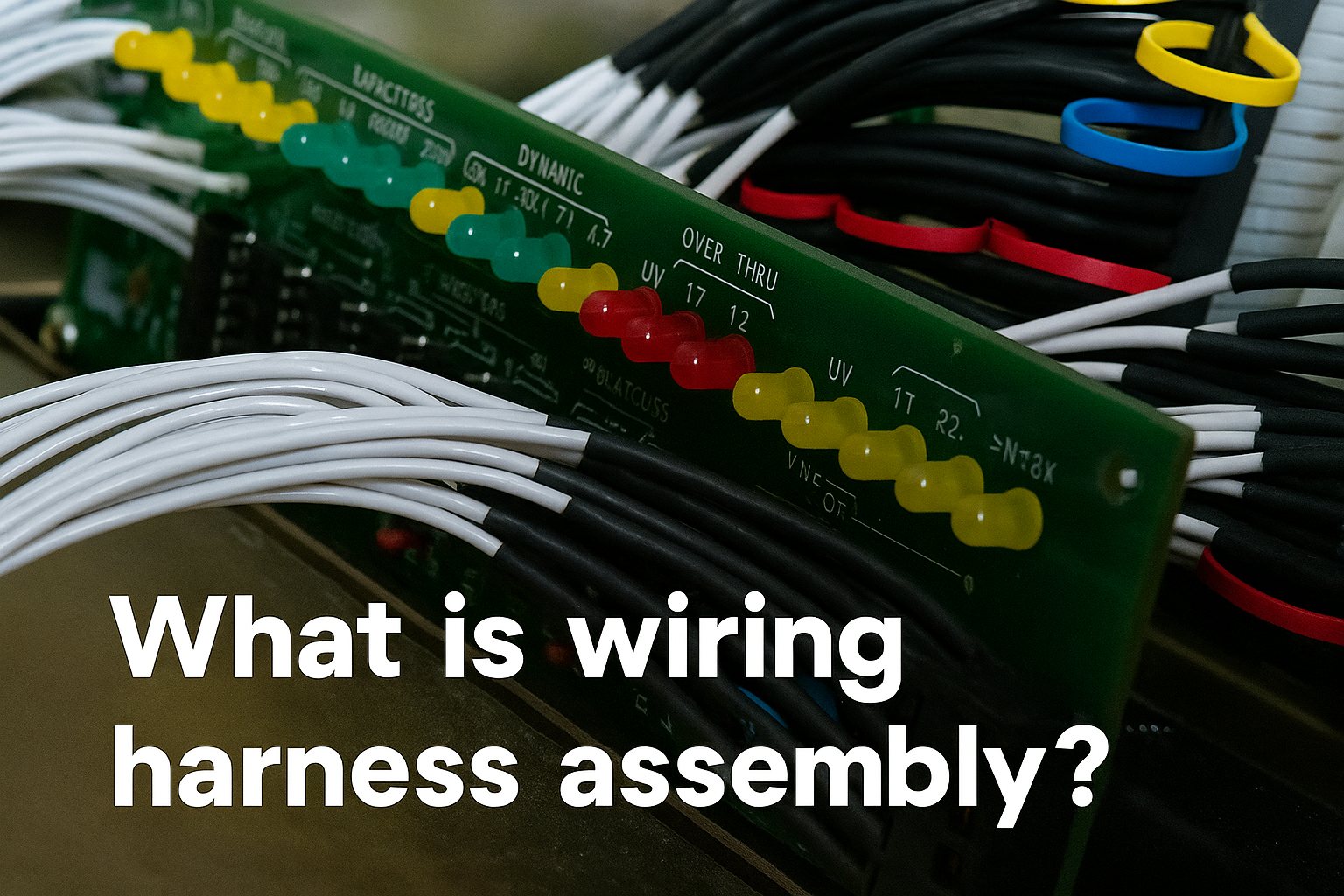
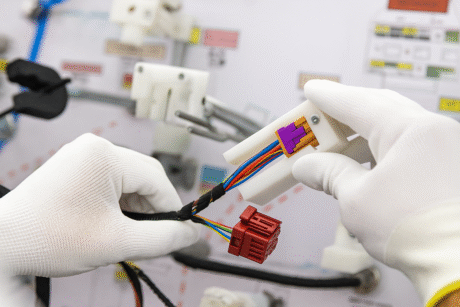
A wire harness assembly—sometimes simply called a wiring harness—is an organized bundle of electrical wires, terminals, and connectors that transmit power and signals between devices.
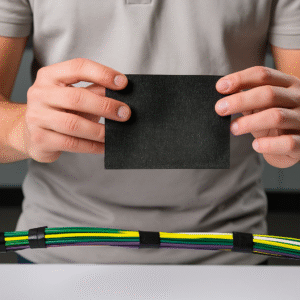
Instead of leaving individual wires exposed and tangled, manufacturers bind them together into a single unit using protective coverings such as PVC tubing, braided sleeves, or heat-shrink materials. This makes the system more compact, durable, and easier to install.
In simple terms, a wire harness is the nervous system of any electrical device—it connects different parts so electricity and data can flow efficiently.
Key Components of a Wire Harness
A complete harness typically includes several parts working together:
Wires and Cables: Conduct electricity or transmit signals. They vary in material (usually copper or aluminum) and gauge depending on current requirements.
Terminals: Metal connectors attached to wire ends to make electrical connections.
Connectors: Interface devices that link the harness to components or other harnesses.
Protective Sheath: Outer covering (plastic, rubber, or braided) to guard against abrasion, heat, or moisture.
Tapes, Clamps, and Ties: Used to bind and secure wires neatly.
Each component is chosen based on the application’s voltage, environment, and mechanical stress levels.
How a Wire Harness Works
How a Wire Harness Works
The function of a wire harness is quite straightforward:
Transmit power from a source (like a battery) to an electrical load (like a light or motor).
Carry signals between sensors, controllers, and output devices.
Protect and organize the internal wiring so maintenance, repair, or upgrades are easier.
By consolidating multiple circuits into one structure, a wire harness reduces clutter, speeds up assembly time, and minimizes the chance of wiring errors.
Main Benefits of Using Wire Harness Assemblies
1. Organization and Space Efficiency
Without harnesses, machines would have hundreds of individual wires tangled together. Harnesses group them neatly, reducing installation space and making the design cleaner—especially vital in compact devices like cars or aircraft.
2. Improved Protection
The protective casing of a harness guards wires against:
Heat and moisture
Vibration and friction
Chemical exposure
Electrical short circuits
This extends the lifespan of the entire electrical system.
3. Simplified Installation and Maintenance
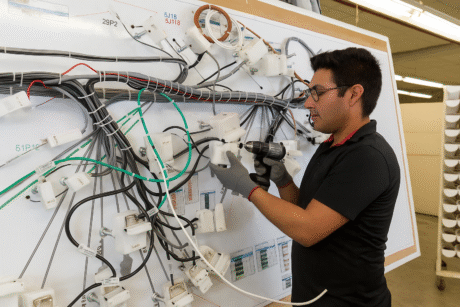
Because wires are pre-grouped, technicians can install or replace harnesses quickly without tracing individual cables. This reduces labor time and the risk of miswiring.
4. Enhanced Safety
Insulated coverings prevent accidental electric shocks and short circuits, ensuring safer operation for users and technicians.
Common Materials Used in Wire Harness Construction
Common Materials Used in Wire Harness Construction
The materials used in a wire harness depend on performance, flexibility, and environmental needs.
| Component | Common Materials | Properties |
| Conductors | Copper, Aluminum | High conductivity, flexibility |
| Insulation | PVC, XLPE, PTFE, Silicone | Heat and chemical resistance |
| Outer Sheath | Braided nylon, corrugated tubing | Mechanical protection |
| Connectors | Brass, Phosphor Bronze, Plastic housings | Corrosion resistance |
| Tape & Ties | Polyester tape, nylon straps | Bundling and vibration control |
For example, automotive harnesses often use XLPE insulation because it resists high temperatures, while medical harnesses may use silicone for sterilization compatibility.
Applications of Wire Harness Assemblies
Wire harnesses are used in nearly every industry that relies on electrical systems.
Automotive
Used to connect lighting, sensors, ignition, infotainment, and safety systems. Without harnesses, cars would be nearly impossible to assemble efficiently.
Aerospace
Aircraft depend on lightweight, heat-resistant harnesses to handle extreme conditions while maintaining reliability.
Industrial Machinery
Harnesses link control panels, sensors, and actuators—ensuring smooth automation and equipment communication.
Medical Equipment
Critical for life-support machines, diagnostic devices, and imaging systems, where reliability and cleanliness are essential.
Telecommunications
Used in routers, base stations, and satellites to transmit data with minimal interference.
Agricultural Equipment
Tractors and harvesters rely on harnesses that can withstand dirt, vibration, and weather.
Wire Harness vs. Cable Assembly
Though both organize multiple conductors, they differ mainly in construction and application.
| Feature | Wire Harness | Cable Assembly |
| Protection Level | Basic | Heavy-duty |
| Sheathing Material | Light plastic or tape | Rugged vinyl or rubber |
| Best Use | Indoor or controlled environments | Outdoor or harsh environments |
| Flexibility | Easier to separate and modify | More rigid and sealed |
In short, if your application involves exposure to heat, moisture, or chemicals, choose a cable assembly. For indoor or low-stress systems, a wire harness is more cost-effective and easier to manage.
The Design and Manufacturing Process
Designing a wire harness involves several key stages:
Requirement Analysis: Identify voltage, signal type, operating temperature, and space limits.
Schematic Design: Engineers create circuit diagrams and select connector types.
Material Selection: Choose conductor and insulation materials suitable for performance and safety.
Prototyping: A sample harness is built and tested for fit and function.
Mass Production: Automated and manual processes like cutting, crimping, soldering, and bundling are performed.
Testing & Quality Inspection: Each harness undergoes continuity and insulation resistance tests to ensure flawless performance.
Testing and Quality Assurance
Quality testing ensures every harness meets both electrical and mechanical standards. Common tests include:
Continuity Testing: Ensures no open circuits exist.
Hi-pot Testing: Checks insulation strength under high voltage.
Pull Testing: Verifies crimp and connector strength.
Visual and Dimensional Inspections: Ensures assembly accuracy.
Reliable manufacturers often follow standards such as IPC/WHMA-A-620 for wire harness quality.
Summary
Wire harness assemblies are the hidden backbone of modern technology. From your car and phone to industrial robots and airplanes, they keep systems organized, protected, and functional.
By combining smart design, durable materials, and precise manufacturing, wire harnesses ensure the safe and efficient flow of electricity across countless applications.
Whether you’re an engineer, technician, or product designer, understanding the basics of wire harnesses is crucial for building reliable electrical systems.
FAQs
- What’s the main purpose of a wire harness?
To organize, protect, and simplify the routing of electrical wires within a system. - Can wire harnesses be customized?
Yes. Harnesses can be tailored for length, connector type, temperature resistance, and voltage rating. - What industries use wire harness assemblies the most?
Automotive, aerospace, medical, telecommunications, and manufacturing. - How are wire harnesses tested for quality?
Using continuity, insulation, and pull strength tests to ensure reliability. - What’s the difference between wire harness and cable assembly?
Wire harnesses are used in low-stress environments; cable assemblies are designed for harsh, outdoor conditions.