
Wiring harnesses play a crucial role in the operation of modern electrical and electronic systems. From cars and industrial machinery to medical devices and renewable energy systems, they ensure the efficient transmission of power and signals while keeping wiring organized, protected, and easy to manage.
In this guide, we’ll explore what wiring harnesses are, how they’re made, where they’re used, and why they’re indispensable in today’s technology-driven industries.
What Is a Wiring Harness and What Does It Do?
A wiring harness (also known as a wire harness or cable harness) is a structured assembly of electrical wires, connectors, terminals, and protective components that transmits power and data signals between different parts of a system.
Instead of routing multiple loose wires individually, the harness groups them together into a single organized unit. This compact structure simplifies installation, improves space efficiency, and provides protection against heat, abrasion, vibration, and moisture.
Core Functions:
Power transmission: Carries electrical energy between components.
Signal communication: Transfers data signals for sensors, controls, and communication devices.
Protection: Prevents wear, short circuits, and environmental damage.
Simplification: Streamlines complex wiring into a pre-assembled, easy-to-install structure.
By combining multiple circuits into one organized assembly, wiring harnesses reduce human error during assembly and support reliable performance throughout the product’s life cycle.
Structure and Components of a Wiring Harness
Structure and Components of a Wiring Harness
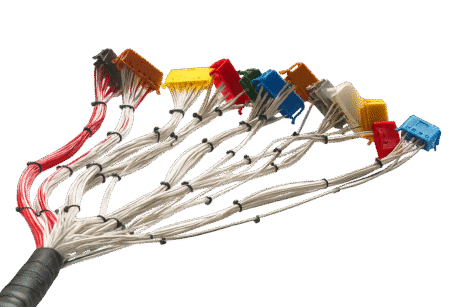
A wiring harness typically includes several interdependent parts, each serving a specific electrical or mechanical function.
Conductors
The core of any wiring harness is the conductor — usually copper due to its excellent conductivity and flexibility. In weight-sensitive applications like aerospace or electric vehicles, aluminum may be used as a lighter alternative.
Insulation
Each conductor is coated with an insulating material to prevent short circuits and protect against heat or chemicals. Common insulation materials include:
PVC (Polyvinyl Chloride): Cost-effective and flexible for general use.
XLPE (Cross-linked Polyethylene): High heat resistance and durability.
PTFE (Teflon): Excellent chemical and temperature resistance for demanding environments.
Connectors and Terminals
Connectors allow the harness to interface with sensors, motors, switches, and control units. They are often made of brass, tin-plated copper, or nickel alloys, ensuring corrosion resistance and stable connectivity.
Protective Sleeving and Looms
To prevent damage from abrasion, moisture, or movement, harnesses are covered with:
Braided sleeving
Corrugated conduit
Heat shrink tubing
These provide an extra layer of mechanical protection.
Tapes, Labels, and Fasteners
Harnesses are bundled, taped, and labeled for organization and serviceability. Clear labeling ensures faster troubleshooting and maintenance.
Types of Wiring Harnesses
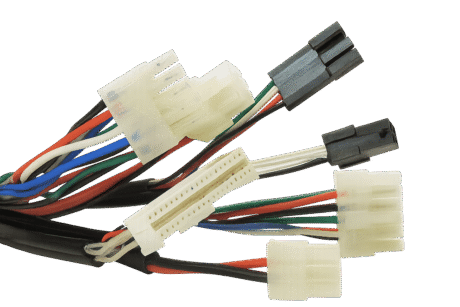
Types of Wiring Harnesses
While all harnesses perform similar functions, their design depends heavily on the application environment and electrical requirements.
Engine Harnesses
Used in cars, trucks, and heavy machinery
Must withstand high temperatures, vibration, and chemical exposure
Delivers power and sensor signals to the engine’s components
Dashboard Harnesses
Found in vehicle dashboards, instrument panels, and infotainment systems
Compact and flexible to fit limited space
Battery Cable Harnesses
Handles high-current loads from batteries or power supplies
Built with thick-gauge wires and reinforced insulation for safety
Sensor Harnesses
Used in medical, industrial, and automation applications
Transmit low-voltage, high-accuracy signals between sensors and control units
Custom Wire Harnesses
Tailored for specialized equipment such as agricultural machinery, marine systems, or industrial control panels
Designed to meet specific electrical, mechanical, and environmental standards
Materials Used in Wiring Harness Manufacturing
The performance and lifespan of a wiring harness depend largely on material selection. Each component must be chosen based on its operating environment and required specifications.
| Component | Common Materials | Key Properties |
| Conductors | Copper, Aluminum | High conductivity, flexibility |
| Insulation | PVC, XLPE, PTFE | Electrical insulation, temperature resistance |
| Connectors | Brass, Tin-plated Copper | Corrosion resistance, strong contact |
| Sleeving | Braided Nylon, Corrugated Tubing | Mechanical and environmental protection |
| Labels/Fasteners | Heat-resistant tapes, Cable ties | Organization and maintenance efficiency |
Additionally, all materials should comply with UL, ISO, and RoHS standards for safety and environmental protection.
Common Applications of Wiring Harnesses
Wiring harnesses are found in virtually every industry that uses electrical or electronic systems.
Automotive and Transportation
Power distribution for lights, sensors, and control modules
Communication between electronic control units (ECUs)
Enhanced vibration resistance and compact design for confined spaces
Industrial Equipment
Used in robotics, automation systems, and control panels
Ensures reliable connections in factories where dust, vibration, and heat are common
Medical Devices
Integrated into diagnostic machines, imaging systems, and life-support equipment
Require high reliability and precision signal transmission
Power Generation and Energy Systems
Connects components in solar, wind, and backup power systems
Designed to handle high voltages and outdoor environments
Agricultural and Off-Road Equipment
Built for durability under dirt, moisture, and UV exposure
Used in tractors, excavators, and construction vehicles
Benefits of Using Wiring Harnesses
The use of wiring harnesses provides multiple functional and manufacturing advantages:
1. Enhanced Organization
Bundling multiple wires into one structure eliminates clutter and improves assembly efficiency.
2. Faster Installation
Pre-configured harnesses reduce wiring errors and save labor time during assembly.
3. Improved Safety
Insulation and sleeving reduce the risk of electrical short circuits and fire hazards.
4. Greater Durability
Harnesses are designed to resist vibration, heat, and corrosion — ideal for long-term reliability.
5. Space Efficiency
Compact, custom layouts enable better use of available space, especially in vehicles and small devices.
6. Easier Maintenance
Labeling and modular connectors simplify diagnostics and part replacement.
Design and Manufacturing Considerations
Creating a high-quality wiring harness involves careful planning and testing.
Key Design Steps:
Electrical schematic design – mapping circuits and voltage requirements.
Harness layout – determining wire routing and connector positions.
Material selection – choosing wires, insulation, and protective coverings.
Prototyping and testing – verifying fit, performance, and durability.
Quality Testing Includes:
Continuity testing – ensuring proper electrical flow.
Insulation resistance testing – checking for short circuits or leakage.
Vibration and thermal testing – ensuring performance in harsh conditions.
Wiring Harness vs. Cable Assembly
| Aspect | Wiring Harness | Cable Assembly |
| Purpose | Organizes multiple circuits in one bundle | Connects a few conductors for a single function |
| Protection | Often covered with sleeving or conduit | Typically shielded and insulated for external use |
| Complexity | Higher, used in large systems | Simpler, used for specific connections |
| Flexibility | Highly customizable | More standardized |
Both play essential roles, but wiring harnesses are ideal for complex electrical architectures, while cable assemblies suit simpler point-to-point connections.
Future Trends in Wiring Harness Technology
As technology evolves, wiring harness design is shifting toward smarter, lighter, and more sustainable solutions:
Lightweight materials: Aluminum and thin-wall insulation reduce weight for EVs and aerospace.
Modular and digital harnesses: Integration with IoT and data networks.
Eco-friendly design: Recyclable materials and low-VOC insulation.
Automated manufacturing: Robotics and 3D modeling for precision harness assembly.
Conclusion
Wiring harnesses are the backbone of modern electrical systems. By bundling multiple circuits into a single organized unit, they enhance reliability, safety, and efficiency across countless industries — from vehicles and machinery to renewable energy and medical equipment.
As design and material technologies continue to advance, wiring harnesses will become even more compact, intelligent, and environmentally sustainable — powering the next generation of connected systems.
FAQs
1. What is the difference between a wiring harness and a cable assembly?
A wiring harness is a structured bundle of multiple wires, connectors, and protective components used to organize complex electrical systems — such as those in vehicles or machinery. In contrast, a cable assembly usually involves fewer conductors and is designed for a specific purpose, like connecting two devices.
The main difference lies in complexity and application: harnesses manage multiple circuits within large systems, while cable assemblies handle simpler, point-to-point connections.
2. How long does a wiring harness typically last?
The lifespan of a wiring harness depends on its materials, environmental conditions, and usage. In general:
Automotive harnesses last 10–15 years or more under normal use.
Industrial or outdoor harnesses may last 5–10 years, depending on exposure to heat, moisture, or vibration.
With proper insulation, sealing, and maintenance, high-quality harnesses can function reliably for decades in stable environments.
Regular inspections for corrosion, abrasion, and connector integrity help extend service life.
3. What tests are performed to ensure wiring harness quality?
Wiring harnesses undergo rigorous electrical and mechanical testing before shipment. Common tests include:
Continuity testing: Verifies that current flows through all circuits without interruption.
Insulation resistance testing: Ensures no leakage or short circuit between wires.
High-voltage (Hi-Pot) testing: Confirms dielectric strength under high voltage.
Pull and crimp tests: Check mechanical strength of terminals and connectors.
Vibration, heat, and moisture tests: Simulate real-world conditions to ensure durability.
These tests are typically conducted according to IPC/WHMA-A-620 and ISO 9001 quality standards.
4. What factors affect the cost of a wiring harness?
Several variables influence the price of a wiring harness:
Wire length and gauge: Larger and longer wires increase material costs.
Number of circuits: More connections mean more labor and assembly complexity.
Connector type: Specialized or waterproof connectors cost more.
Protective coverings: Braided sleeving, heat shrink, or conduit adds protection but raises cost.
Customization level: Tailored designs for unique systems require engineering time and prototyping.
While custom harnesses are more expensive than standard cables, they save time, reduce errors, and improve reliability during assembly and operation.
5. How do you maintain a wiring harness?
Proper maintenance ensures safety and long-term performance. Here are key steps:
Inspect regularly: Look for frayed wires, corrosion, or loose connectors.
Keep clean and dry: Moisture and dust can degrade insulation and cause short circuits.
Avoid excessive bending or pulling: Mechanical stress can break internal conductors.
Use protective coatings: Apply dielectric grease or sealing compounds for outdoor applications.
Replace damaged components immediately: Even small faults can lead to major failures if ignored.
Following these steps helps maintain electrical integrity and extends the lifespan of the harness.