
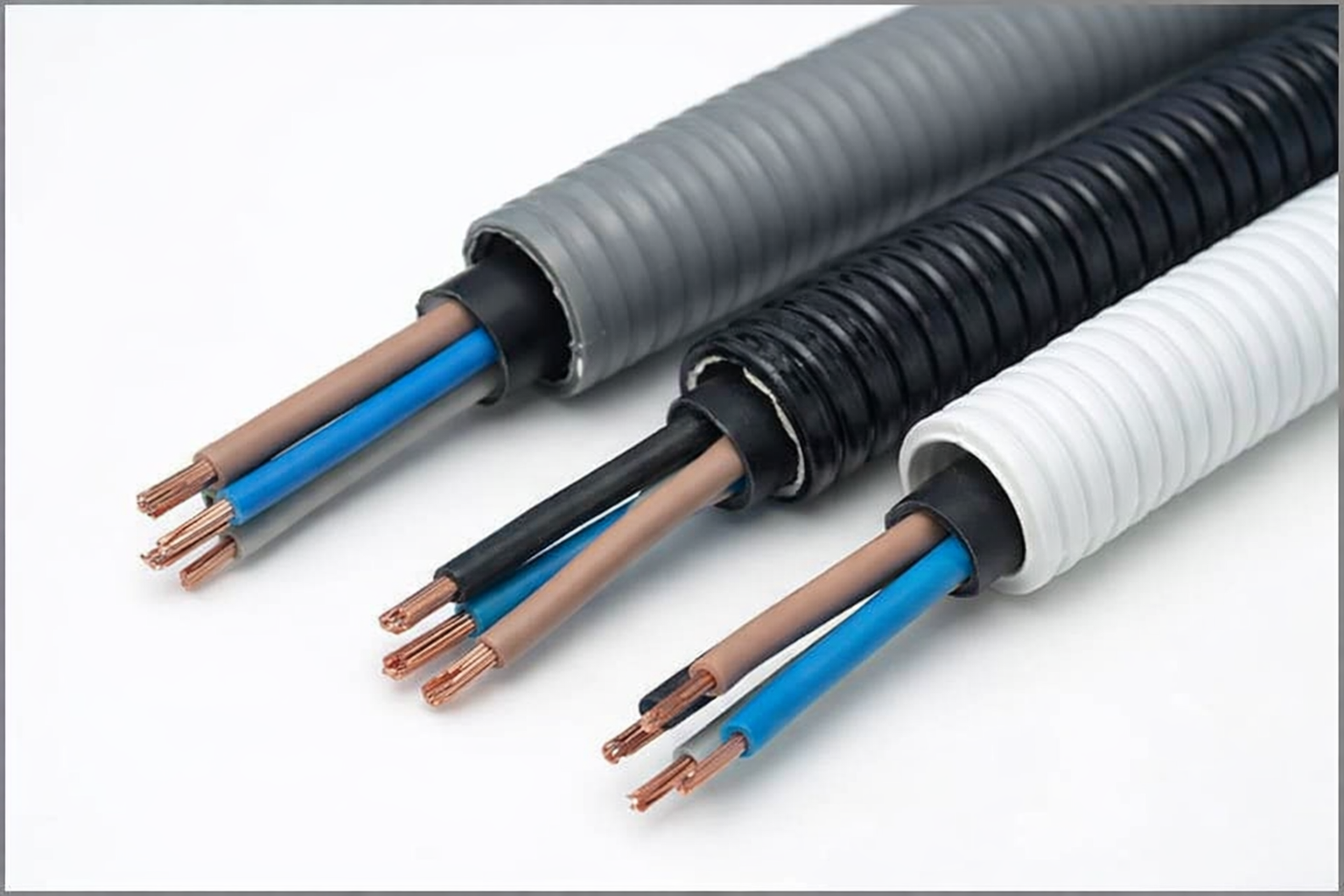
Electrical cables are fundamental components of modern power distribution and communication systems. At their core, cables consist of one or more insulated conductors designed to carry electrical power or signals from one point to another. However, as electrical systems become more complex and environments grow increasingly noisy, standard unshielded cables often struggle to maintain signal integrity and safety.
A shielded cable incorporates an additional conductive layer—known as shielding—around the internal conductors. This shielding is designed to protect the cable from external electromagnetic interference (EMI) and radio-frequency interference (RFI), while also preventing internal signals from radiating outward and disturbing nearby equipment.
Shielded cables are widely used in industrial plants, commercial buildings, data centers, laboratories, and advanced communication systems. Their role is critical not only for performance stability but also for workplace safety, equipment longevity, and operational reliability.
Chapter 1: What Is a Shielded Cable and Its Key Features
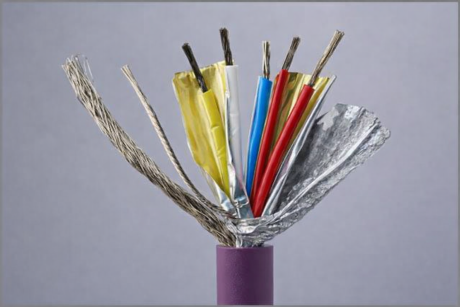
A shielded cable is a cable that includes one or more conductive layers—such as braided wire, metal foil, or spiral wraps—surrounding the insulated conductors. This conductive shield is usually connected to ground, allowing unwanted electrical noise to be safely dissipated away from sensitive circuits.
Key Functional Characteristics
Signal containment: Prevents signal leakage that could interfere with adjacent cables
Noise rejection: Blocks external EMI and RFI from corrupting signals
Improved reliability: Ensures consistent electrical performance
Enhanced safety: Reduces electrical hazards in high-power environments
Interestingly, cables can act as both sources and receivers of electromagnetic interference. When high current loads—such as transformers, motors, heaters, or switching power supplies—are present, unshielded cables may radiate noise like antennas. Likewise, when signal cables are routed close to power cables, they can pick up interference that disrupts communication or control signals.
Shielded cables mitigate these risks by isolating internal conductors from surrounding electrical activity, making them indispensable in industrial and mission-critical installations.
Chapter 2: Electrical Noise Levels and When Shielding Is Required
The need for shielding largely depends on the electrical noise level of the environment.
High Electrical Noise Environments
Common sources include:
Heavy motors and generators
Steel mills and foundries
Electrolytic processing plants
High-voltage power distribution systems
In these settings, shielding is mandatory to prevent severe EMI that can cause equipment malfunction, data corruption, and safety hazards.
Medium Electrical Noise Environments
Typical locations:
Manufacturing plants
Control panels with relays
Areas with medium-sized motors
Shielded cables are strongly recommended to maintain system stability and reduce intermittent failures.
Low Electrical Noise Environments
Examples:
Offices and commercial buildings
Laboratories
Storage facilities
While shielding may not always be mandatory, it still improves reliability and future-proofs installations.
Chapter 3: Importance and Evolution of Shielded Cables
As global reliance on digital communication, automation, and electronic control systems increases, cables are no longer passive components. They are active enablers of productivity, connectivity, and safety.
Modern communication networks—ranging from data centers to industrial automation systems—depend on cables capable of handling high frequencies and fast data rates without interference. Even minor EMI can lead to data loss, system downtime, and financial losses.
Shielded cables evolved as a response to:
Increased electrical density in facilities
Higher operating frequencies
Stricter safety and compliance standards
Demand for reliable, high-speed communication
Selecting between shielded and unshielded cables requires understanding not only the application but also power levels, signal sensitivity, frequency range, and environmental conditions.
Chapter 4: How Shielded Cables Prevent EMI and RFI
Electromagnetic interference occurs when external electrical energy disrupts signal transmission. Common sources include:
Power lines
Switching devices
Radio transmitters
Industrial machinery
Shielded cables work by providing a low-impedance path to ground, allowing unwanted noise to be absorbed or reflected away from the signal conductors.
Without proper shielding, EMI can cause:
Data transmission errors
Signal distortion
Equipment overheating
Premature component failure
In safety-critical environments, such interference can pose serious risks to personnel and infrastructure.
Chapter 5: Common Types of Cable Shielding
Braided Shielding
Braided shielding consists of interwoven metal strands—commonly copper or tinned copper—wrapped around the cable core.
Advantages:
High mechanical strength
Excellent flexibility
Long service life
Limitations:
Higher cost
More difficult termination
Coverage typically ranges from 45% to 98%
Braided shields are ideal for low-frequency applications and harsh mechanical environments.
Foil (Metal-Coated Mylar) Shielding
Foil shielding uses a thin aluminum-polyester tape wrapped around the conductor.
Advantages:
Near 100% coverage
Lightweight and low-cost
Easy to apply and terminate
Limitations:
Minimal mechanical strength
Requires a drain wire for grounding
Foil shields are best for high-frequency signal protection where flexibility and strength are less critical.
Spiral (Serve) Shielding
Spiral shielding uses a single metal strand wrapped helically around the conductor.
Advantages:
High flexibility
Coverage up to 99%
Easier termination than braided shields
Limitations:
Slightly less durable under repeated flexing
This type is commonly used in applications requiring frequent movement.
Chapter 6: Applications of Shielded Cables
Shielded Audio Cables
Used to prevent noise contamination in audio signal transmission, ensuring clean and accurate sound reproduction.
Shielded Power Cables
Essential for medium- and high-voltage systems to prevent electrostatic buildup, corona discharge, and electrical shock hazards.
Shielded Coaxial Cables
Designed for RF, video, and data transmission, coaxial cables rely heavily on shielding to maintain signal integrity.
Shielded USB Cables
Provide fast data transfer while protecting sensitive digital signals from external interference.
Chapter 7: Key Considerations When Using Shielded Cables
Proper grounding is essential to ensure shielding effectiveness
Connector design must match the shielding type
Avoid ground loops by grounding at the correct point
Select shielding based on environmental noise levels
Incorrect termination or grounding can significantly reduce shielding performance.
Chapter 8: Custom Shielded Cable Solutions
No two environments are identical. Custom shielded cable solutions allow for:
Optimized conductor materials
Tailored shielding combinations
Precise coverage levels
Improved connector compatibility
Professional customization ensures maximum performance while minimizing unnecessary cost.
Chapter 9: Benefits of Custom Shielded Cable Services
Reduced EMI and signal loss
Improved operational safety
Extended equipment lifespan
Higher productivity and reliability
Expert guidance ensures the correct balance between performance, durability, and cost.
Conclusion
Shielded cables are no longer optional in modern electrical and communication systems. They play a critical role in maintaining signal integrity, ensuring safety, and reducing operational risk across industries.
By selecting the right shielding type—or investing in customized shielded cable solutions—businesses can protect their equipment, personnel, and data while maximizing long-term performance.
If you are planning to upgrade or design a new cable system, investing in properly shielded cables is a smart and future-proof decision. Contact us for more information.
FAQs
1. What is the difference between EMI shielding effectiveness and shield coverage?
Shield coverage refers to the physical percentage of the conductor that is enclosed by the shielding material (for example, 80%, 95%, or nearly 100%). Shielding effectiveness, however, measures how well the shield attenuates electromagnetic interference across specific frequency ranges, usually expressed in decibels (dB). A cable can have high coverage but still perform poorly at certain frequencies if the shielding material or grounding method is inadequate.
2. How does frequency affect the choice of shielding type?
Low-frequency interference is typically better mitigated with braided or spiral shields due to their low resistance and strong magnetic field attenuation. High-frequency interference, on the other hand, is more effectively blocked by foil shielding because of its continuous coverage and superior performance against electric fields. For wideband applications, a foil + braid combination is often the optimal solution.
3. Why is proper grounding critical for shielded cable performance?
Shielding only works effectively when unwanted noise has a clear path to ground. Improper grounding can cause the shield to act as an antenna, amplifying interference instead of suppressing it. In many applications, grounding the shield at one end helps prevent ground loops, while high-frequency or RF applications may require grounding at both ends.
4. What is the role of a drain wire in foil-shielded cables?
A drain wire provides a low-resistance path to ground for foil shields, which are difficult to terminate directly. It ensures consistent electrical contact along the length of the shield and simplifies connector termination. Without a drain wire, the shielding effectiveness of foil-wrapped cables may be significantly reduced.
5. Can shielded cables eliminate EMI completely?
No cable can eliminate EMI entirely. Shielded cables are designed to reduce EMI to acceptable levels defined by industry standards and application requirements. The overall effectiveness also depends on installation practices, connector quality, grounding strategy, cable routing, and proximity to noise sources.
6. How do connectors impact shielding performance?
Connectors are often the weakest point in a shielded cable assembly. If the connector does not maintain 360-degree shield continuity, EMI can leak through the termination point. High-quality shielded connectors are designed to bond the cable shield directly to the connector shell, preserving shielding integrity across the entire assembly.
7. When should a double-shielded or multi-layer shielded cable be used?
Double-shielded cables—such as foil plus braid or dual-braid designs—are recommended in environments with:
Extremely high EMI levels
Mixed analog and digital signals
High-speed data transmission
Aerospace, military, or medical systems
These configurations provide broader frequency protection and enhanced mechanical durability.
8. How does cable flexibility affect shielding choice?
Highly flexible applications, such as robotic arms or moving machinery, benefit from spiral or finely braided shields, which tolerate repeated bending better than foil shields. Foil shields may crack under continuous flexing, leading to reduced shielding performance over time.
9. Are shielded cables required to meet specific industry standards?
Yes. Depending on the application, shielded cables may need to comply with standards such as:
IEC and ISO standards for industrial cables
UL standards for safety and performance
MIL specifications for aerospace and defense
EMC/EMI compliance regulations (CE, FCC)
Meeting these standards ensures reliability, safety, and regulatory acceptance.
10. How do custom shielded cables improve system performance compared to off-the-shelf options?
Custom shielded cables are engineered for specific environments, signal types, and mechanical constraints. By optimizing conductor size, insulation, shielding material, coverage, and connectors, custom solutions reduce unnecessary cost while maximizing EMI suppression, durability, and long-term reliability—something generic cables often cannot achieve.