
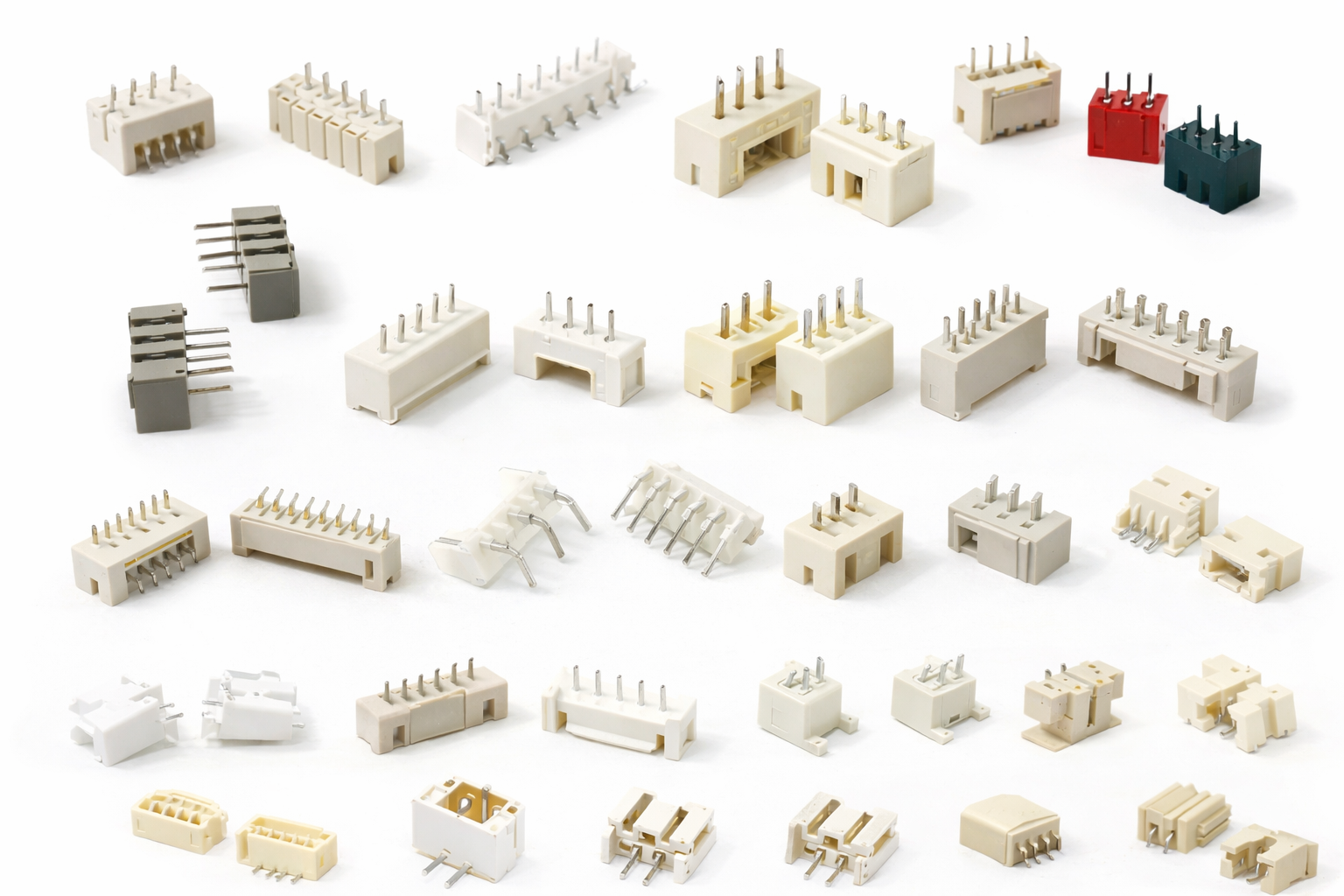
JST connectors are compact, reliable, and versatile components that form the backbone of countless electronic systems, from consumer gadgets to industrial machinery. Understanding JST connectors—their types, features, and applications—is crucial for engineers, hobbyists, and electronics enthusiasts alike. This guide dives deep into the world of JST connectors, providing practical insights, technical details, and industry applications.
What is a JST Connector?
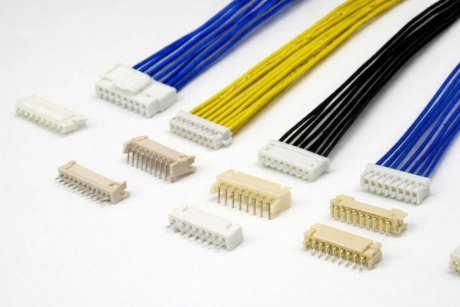
JST stands for Japan Solderless Terminal, a family of electrical connectors designed to make secure, quick, and solder-free connections. Initially developed in Japan, JST connectors use crimped metal terminals that snap into durable plastic housings. These small connectors are ideal for mass production and DIY electronics, offering reliable connections in tight spaces and under mechanical stress.
Unlike soldered joints, JST connectors allow for repeated disconnection and reconnection, making them perfect for modular electronics. Their compact design, combined with strong contact pressure, ensures that connections remain stable even in high-vibration environments. Popular uses include drones, 3D printers, laptops, and wearable devices.
Each JST series, such as PH, XH, and SH, is designed for specific wire sizes, voltage, and current requirements. Mis-mating connectors is prevented by keyed slots, ensuring that only the correct counterpart fits properly.
JST Connectors Across Various Sectors
JST connectors are versatile, performing in both delicate and demanding applications across multiple industries:
1. Consumer Electronics
From smartphones and tablets to smart home devices, JST connectors enable power and data transfer in ultra-compact electronics. Their small size allows for stable connections even under repeated motion and mechanical stress, supporting the trend of thinner, lighter devices. They are increasingly used in IoT devices, digital cameras, and portable gaming equipment.
2. Automotive Electronics
Modern vehicles contain hundreds of JST connectors within dashboards, infotainment systems, and advanced driver-assistance systems (ADAS). They withstand vibration, temperature changes, and exposure to fluids, making them ideal for automotive electrical circuits. The standardized design also simplifies manufacturing and ensures compatibility across vehicle subsystems.
3. Industrial Control Systems
JST connectors are commonly used in factory automation for linking actuators, sensors, and programmable logic controllers (PLCs). They resist dust, water, and electromagnetic interference (EMI), making them reliable in harsh industrial environments. Their modular design allows quick maintenance and system reconfiguration, minimizing downtime.
4. Medical Devices
Medical-grade JST connectors are essential for monitoring equipment, diagnostic devices, and wearable sensors. They often feature safety locking mechanisms to prevent accidental disconnections while maintaining signal integrity for sensitive biometric data. Compact designs help integrate electronics into portable and wearable medical devices.
Pros and Cons of JST Connectors
Advantages
Compact and Space-Saving: Small housings and tight pin spacing (as low as 1 mm) allow use in modern, space-constrained electronics.
Secure Connections: Friction fits and positive latches ensure stable mating even under vibration.
Standardized Identification: Color-coded housings and series markings make assembly and maintenance straightforward.
Manufacturing-Friendly: Solderless terminals are ideal for automated production.
Variety in Performance: Available in multiple current ratings (2–10A) and temperature ranges (-25°C to +85°C).
Limitations
Electrical Capacity: Standard connectors may only support low-to-moderate currents.
Series Specificity: Each series requires precise matching to ensure compatibility.
Installation Requirements: Specialized crimping tools are needed for reliable connections.
Environmental Limitations: Basic models need extra protection in harsh conditions.
Quality Assurance: Non-genuine products can compromise performance and reliability.
Types of JST Connectors
Different series cater to unique requirements, balancing size, current capacity, and environmental resilience:
| Series | Pitch | Current/Voltage | Typical Uses |
| PH | 2.0 mm | 2A / 100V | Digital cameras, drones, RC vehicles, small PCB interconnects |
| XH | 2.5 mm | 3A / 250V | 3D printers, small appliances, automotive dashboards |
| SH | 1.0 mm | 1A / 50V | Wearables, medical sensors, miniature PCBs |
| EH | 2.5 mm | 3A / 250V | Power supplies, LED lighting, industrial modules |
| ZH | 1.5 mm | 1A / 100V | Laptops, tablets, small robotics, IoT devices |
| GH | 1.25 mm | 1A / 50V | Mobile phones, compact medical devices |
| VH | 3.96 mm | 10A / 250V | Power tools, industrial motor controls, automotive power distribution |
| PA | 2.0 mm | 2A / 100V | Battery packs, small robotics, LED strips |
| RCY | 2.5 mm | 3A / 250V | Cylindrical power connectors for adapters, RC batteries |
| SM | 2.5 mm | 3A / 250V | IP67 waterproof, marine electronics, outdoor LED signage, automotive |
FAQ
- What are the most common JST connector types?
PH, XH, SH, and VH series are widely used, with varying pitch sizes and current ratings for specific applications. - Why aren’t JST connectors interchangeable between series?
Each series has unique housings, terminal sizes, and pitches to ensure proper fit and performance. Mismatching series can cause poor contact and electrical failure. - What happens if I exceed the current rating?
Overloading connectors may cause overheating, plastic charring, fire, or increased resistance. Use higher-rated connectors like VH for high-power applications. - Why are specialized crimping tools necessary?
Correct crimping ensures a gas-tight connection and prevents terminal damage. Generic tools may result in unreliable connections. - How many mating cycles can JST connectors withstand?
Typically 30–50 cycles before contact resistance increases, with terminal spring fatigue being the limiting factor. - Are there waterproof JST connectors?
Yes, SM series connectors achieve IP67 protection with silicone gaskets, secondary latches, and strain relief for terminals. Proper assembly is crucial. - How can I verify JST connector authenticity?
Look for precise molding, consistent metal plating, and laser-etched markings. Purchase through authorized distributors to avoid counterfeit products. - Why do some JST series perform better in vibration?
Positive latch designs (XH, VH) and optimized spring terminals maintain stable connections in vibrating environments.
Do You Need JST Connectors?
JST connectors are essential for reliable, space-efficient electrical connections in electronics across consumer, automotive, industrial, and medical fields. Choosing the correct series and using the proper crimping tools ensures long-lasting performance.
Whether you’re connecting a drone battery, wiring a 3D printer, or designing wearable medical sensors, JST connectors offer a standardized, durable, and compact solution. For professional guidance and sourcing, companies like Grace provide technical support and access to genuine JST connectors to meet your project requirements.