
Quick Answer: Cable Assembly vs Wire Harness
If you need a fast decision:
Cable Assembly → Best for harsh environments (moisture, heat, vibration, chemicals)
Wire Harness → Best for controlled environments (inside equipment or enclosures)
Cable Assembly → Higher cost, but better durability and protection
Wire Harness → Lower cost, easier installation and maintenance
Key difference → Protection level and application environment
👉 In most OEM applications, cable assemblies are used for external or high-stress conditions, while wire harnesses are used for internal wiring organization.
Introduction: Why This Choice Matters
For OEMs in automotive, industrial equipment, and electronics, electrical reliability is non-negotiable.
Choosing between a cable assembly and a wire harness directly impacts:
System performance
Product lifespan
Maintenance costs
Safety and compliance
A wrong decision can result in:
Electrical failures
Increased downtime
Higher total cost of ownership
This guide provides a clear, engineering-driven comparison to help you select the right interconnect solution for your application.
What is a Cable Assembly?
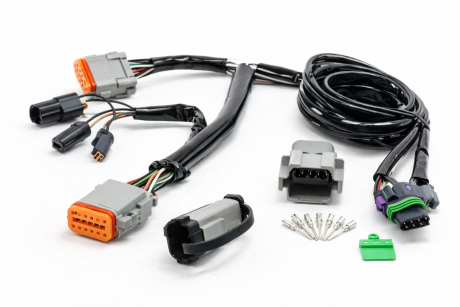
A cable assembly is a group of wires or conductors enclosed within a single protective outer jacket.
Key Features
Full environmental protection
Resistance to moisture, chemicals, and abrasion
Built-in strain relief
Optional shielding (EMI/RFI)
Custom connectors and overmolding
Materials Used
PVC
Thermoplastic elastomers (TPE)
Rubber compounds
Typical Applications
Industrial machinery
Marine systems
Outdoor equipment
High-vibration environments
👉 Core advantage:
Cable assemblies are designed for durability and reliability in demanding conditions.
What is a Wire Harness?
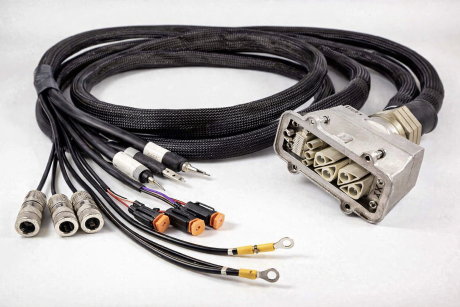
A wire harness is an organized bundle of wires grouped using:
Ties
Sleeves
Conduits
Unlike cable assemblies, wires are not fully enclosed.
Key Features
Lightweight and flexible
Easy to install and route
Cost-effective
Typical Applications
Automotive dashboards
Consumer electronics
Control panels
Internal equipment wiring
👉 Core advantage:
Wire harnesses are optimized for organization and efficiency, not protection.
Cable Assembly vs Wire Harness: Key Differences
Protection Level
Cable Assembly: Fully enclosed, high protection
Wire Harness: Minimal protection
👉 If exposure risk exists → choose cable assembly
Environmental Resistance
Cable Assembly: مقاust moisture, UV, chemicals, abrasion
Wire Harness: Suitable for dry, controlled environments
Cost Consideration
Wire Harness: Lower upfront cost
Cable Assembly: Higher initial cost but longer lifespan
👉 Important insight:
Cable assemblies often reduce long-term maintenance costs.
Design Complexity
Cable Assembly: Engineered for complex systems
Wire Harness: Simpler layout-based design
Installation & Maintenance
Wire Harness: Easier to install, modify, and repair
Cable Assembly: More durable but less flexible after installation
Comparison Table
| Feature | Cable Assembly | Wire Harness |
| Protection | High | Low |
| Environment | Harsh | Controlled |
| Cost | Higher | Lower |
| Flexibility | Moderate | High |
| Durability | Excellent | Moderate |
| Complexity | High | Low |
Application-Based Comparison
Harsh Environments
Choose Cable Assembly:
Outdoor equipment
Industrial machinery
Marine systems
Controlled Environments
Choose Wire Harness:
Control panels
Internal wiring
Consumer electronics
High Vibration Applications
Cable assemblies provide better durability
Prevent wire fatigue and failure
Cost-Sensitive Projects
Wire harnesses reduce upfront investment
Ideal for high-volume production
Environmental Considerations
Cable Assembly
Waterproof and dust-resistant
UV resistant
Chemical resistant
Abrasion resistant
Wire Harness
Limited protection
Requires additional insulation if exposed
👉 Key takeaway:
Environment is the #1 decision factor.
Cost Analysis: Initial vs Long-Term Value
Wire Harness
Lower material cost
Faster production
Lower upfront investment
Cable Assembly
Higher upfront cost
Reduced maintenance
Longer service life
👉 Smart OEMs focus on:
Total Cost of Ownership (TCO), not just initial cost
Design and Engineering Considerations
Cable Assembly
Integrated shielding
Overmolding for strain relief
High-performance routing
Signal integrity protection
Wire Harness
Flexible routing
Easy customization
Simpler integration
👉 Engineering factors to consider:
EMI/RFI shielding
Mechanical stress
Routing complexity
When to Choose Cable Assembly vs Wire Harness
Choose Cable Assembly When:
Exposure to moisture, heat, or chemicals
High vibration or movement
EMI shielding is required
Long-term durability is critical
Choose Wire Harness When:
Environment is clean and enclosed
Cost control is a priority
Easy installation is needed
Frequent maintenance or modifications are expected
Common Failure Risks
Cable Assembly Risks
Over-specification → unnecessary cost
Wire Harness Risks
Exposure damage
Abrasion and wear
Electrical shorts
👉 Proper selection minimizes system failure risk.
Industry Applications
Automotive
Wire harness → internal wiring systems
Cable assembly → engine compartments
Industrial Equipment
Cable assembly → heavy-duty external systems
Wire harness → internal connections
Electronics
Wire harness → compact internal wiring
Cable assembly → high-performance connections
Step-by-Step Selection Guide
- Define operating environment
- Evaluate mechanical stress (vibration, movement)
- Determine electrical requirements (signal, shielding)
- Consider cost constraints
- Select appropriate solution
Why Work with a Custom Manufacturer
Choosing the right solution is only part of the process.
A reliable manufacturer provides:
Custom cable assemblies and wire harnesses
Engineering consultation
Design for manufacturability (DFM)
Rapid prototyping
Quality assurance
👉 This ensures:
Better performance
Faster production
Lower long-term cost
Conclusion
Cable assemblies and wire harnesses serve different but complementary roles:
Cable Assembly → protection, durability, high performance
Wire Harness → organization, flexibility, cost efficiency
👉 The right choice depends on:
Environment
System complexity
Budget
Get Expert Support for Your Project
Not sure which solution fits your application?
We can help you:
Select the optimal design
Optimize cost and performance
Develop custom cable assemblies and wire harnesses
Deliver from prototype to mass production
Send us your drawings or specifications today to receive:
Fast quotation
Engineering feedback
Customized solution
👉 Contact us now to start your project.
FAQs
- What is the main difference between cable assembly and wire harness?
Cable assemblies provide full protection, while wire harnesses mainly organize wires. - Which is better for harsh environments?
Cable assemblies are designed for harsh conditions. - Are wire harnesses cheaper than cable assemblies?
Yes, they typically have lower upfront costs. - When should I use a cable assembly?
When durability, protection, and long-term reliability are critical.