
1. 5-Step Wiring Harness Quality Assurance Framework (Quick Answer)
If you are evaluating or implementing wiring harness quality assurance, the most effective approach is to focus on these five core areas:
1.1 Design for Manufacturability (DFM)
Quality starts at the design stage. A well-optimized wiring harness design ensures not only performance but also manufacturability, cost efficiency, and consistency.
DFM involves simplifying routing paths, selecting appropriate materials, and minimizing unnecessary complexity. For example, reducing excessive branching or tight tolerances can significantly decrease assembly errors and production time.
A strong DFM approach helps:
Reduce manufacturing defects
Improve assembly efficiency
Lower production costs
Enhance long-term reliability
Manufacturers that collaborate closely with customers during the design phase typically achieve higher quality outcomes.
1.2 Standardized Manufacturing Process
Consistency is critical in wiring harness production. A clearly defined and standardized manufacturing process ensures that every product meets the same quality benchmarks.
This includes:
Detailed Standard Operating Procedures (SOPs)
Step-by-step work instructions
Process documentation and traceability
For example, braided harnesses, over-molded cables, and simple assemblies all require different workflows. Without proper documentation, variation can lead to quality inconsistencies.
Advanced manufacturers also implement:
Real-time production monitoring systems
Error-proofing mechanisms (Poka-Yoke)
Process deviation alerts
A standardized process reduces variability and ensures repeatable quality at scale.
1.3 Inspection & Testing System
A comprehensive inspection and testing system is the backbone of quality assurance.
Inbound Quality Control (IQC)
Before production begins, all incoming materials must be inspected. This includes:
Wire gauge verification
Insulation quality checks
Connector and terminal inspection
Defective raw materials are one of the most common sources of failures, making this step essential.
Prototyping & Validation
Prototype development allows manufacturers to test the design in real-world conditions. It helps identify:
Design flaws
Assembly challenges
Performance limitations
This stage is especially important for custom wiring harnesses.
In-Process Quality Control (IPQC)
Quality checks during production prevent defects from propagating downstream.
Typical IPQC measures include:
Crimp height inspection
Pull force testing
Visual inspections at each stage
Operators follow customer drawings and specifications to ensure compliance.
Final Quality Control (FQC)
Before shipment, each wiring harness undergoes a final inspection.
This includes:
Visual inspection (labeling, dimensions, workmanship)
Electrical testing:
Continuity testing
High-potential (Hi-Pot) testing
Many high-end manufacturers perform 100% testing to guarantee zero defects.
Third-Party Testing (Optional)
Independent testing agencies (such as ETL-certified labs) provide additional assurance and credibility, especially for regulated industries.
1.4 Skilled Workforce & Training
Even with advanced equipment, human expertise remains critical.
Operators must be trained across all production stages, including:
Wire cutting
Labeling
Insulation stripping
Crimping
Terminal insertion
Harness assembly
Certification such as IPC/WHMA-A-620 ensures that technicians meet globally recognized assembly standards.
Continuous training programs help maintain consistency and adapt to evolving technologies.
1.5 Advanced Equipment & Technology
Modern wiring harness manufacturing relies heavily on automation and precision equipment.
Automated Wire Processing
Machines can cut, strip, and terminate wires at high speed with exceptional accuracy, significantly reducing human error.
Crimping Technology
Hydraulic and pneumatic crimping machines ensure consistent crimp quality, which is critical for electrical performance.
Wire Marking Systems
Accurate identification improves traceability and reduces installation errors. Common methods include:
Heat shrink labels
Inkjet printing
Machine-applied labels
Testing Equipment
Advanced testing systems, such as continuity testing boards (teddy boards), allow rapid and accurate fault detection.
Automation in testing increases both efficiency and reliability.
2. Introduction
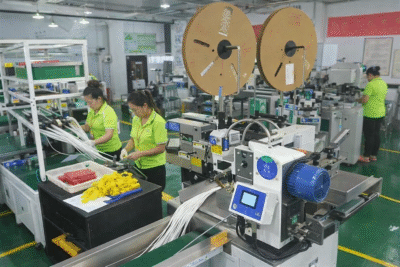
Wiring harnesses are essential components in electrical systems, serving as organized assemblies of wires, connectors, and terminals that transmit power and signals.
From automotive and aerospace to industrial equipment and consumer electronics, wiring harnesses play a critical role in ensuring safe and reliable operation.
However, due to their complexity and application in critical environments, even minor defects can lead to system failures, safety hazards, or costly downtime.
This is why wiring harness quality assurance (QA) is not optional—it is a fundamental requirement.
This guide provides a comprehensive overview of QA practices, helping both manufacturers and buyers understand how to ensure high-quality wiring harness production.
3. Why Quality Assurance Matters in Wire Harness Manufacturing
3.1 Product Reliability & Safety
Wiring harnesses are often used in mission-critical systems. A single faulty connection can result in:
Electrical failures
Equipment malfunction
Fire hazards
For example, in automotive applications, a wiring harness failure could impact braking systems, engine performance, or safety features.
Robust QA processes ensure:
Reliable electrical connections
Consistent performance under stress
Long service life
3.2 Compliance with Industry Standards
Safety & Regulatory Standards
Different regions impose strict requirements on wiring harnesses.
North America: UL, CSA
Global: IEC, CENELEC, CEE
Compliance ensures that products meet safety, performance, and installation requirements.
Environmental Standards
Manufacturers must also comply with environmental regulations, including:
RoHS – Restriction of hazardous substances
REACH – Chemical safety compliance
WEEE – Electronic waste management
These standards are increasingly important for global trade.
Assembly Standards
The IPC/WHMA-A-620 standard defines the acceptability of cable and wire harness assemblies.
Additional standards such as HDMI, QSFP, and TIA/EIA specifications may apply depending on the application.
3.3 Cost Reduction & Efficiency
Effective QA reduces:
Rework and scrap
Production delays
Warranty claims
Early detection of defects significantly lowers overall production costs.
In addition, streamlined QA processes improve operational efficiency and sustainability.
4. How to Evaluate a Manufacturer’s QA Capability
4.1 Certifications
Certifications are a strong indicator of a manufacturer’s quality commitment.
Key certifications include:
ISO 9001 – Quality management systems
IATF 16949 – Automotive quality standards
These demonstrate adherence to internationally recognized practices.
4.2 Industry Experience
Experienced manufacturers bring:
Proven processes
Technical expertise
Problem-solving capabilities
A long track record often correlates with reliability and consistency.
4.3 Supply Chain Quality
High-quality products depend on high-quality materials.
Manufacturers should:
Source from certified suppliers
Ensure RoHS/REACH compliance
Maintain strong supplier relationships
Reliable sourcing minimizes risks and ensures consistency.
4.4 Customer Reputation
Customer feedback provides valuable insights.
Buyers should:
Review testimonials
Check third-party platforms
Evaluate long-term partnerships
A strong reputation reflects consistent performance.
5. Case Example: Manufacturer QA Capability
A professional wiring harness manufacturer typically implements a comprehensive QA system, including:
Outgoing Quality Control (OQC) processes
Cross-section analysis for crimp validation
100% electrical testing
Advanced inspection equipment
These capabilities ensure that every product meets strict quality requirements before delivery.
6. Conclusion
Wiring harness quality assurance is a multi-layered process that spans design, manufacturing, testing, and continuous improvement.
By implementing the 5-step QA framework:
Design for Manufacturability
Standardized Processes
Comprehensive Testing
Skilled Workforce
Advanced Equipment
Manufacturers can achieve:
Higher reliability
Regulatory compliance
Cost efficiency
Customer satisfaction
For buyers, understanding these principles helps in selecting the right supplier and ensuring product quality.
If you are looking for a reliable wiring harness manufacturer with strong quality assurance capabilities:
Request a quote tailored to your specifications
Get expert engineering support
Ensure compliance with global standards
Partner with graceharness that prioritizes quality at every stage—from design to delivery—to guarantee the success of your project.