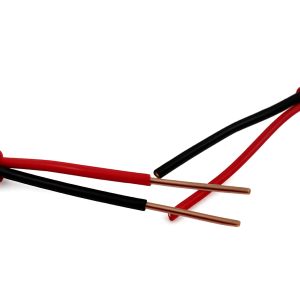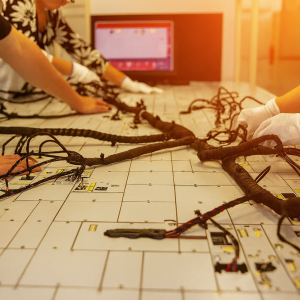

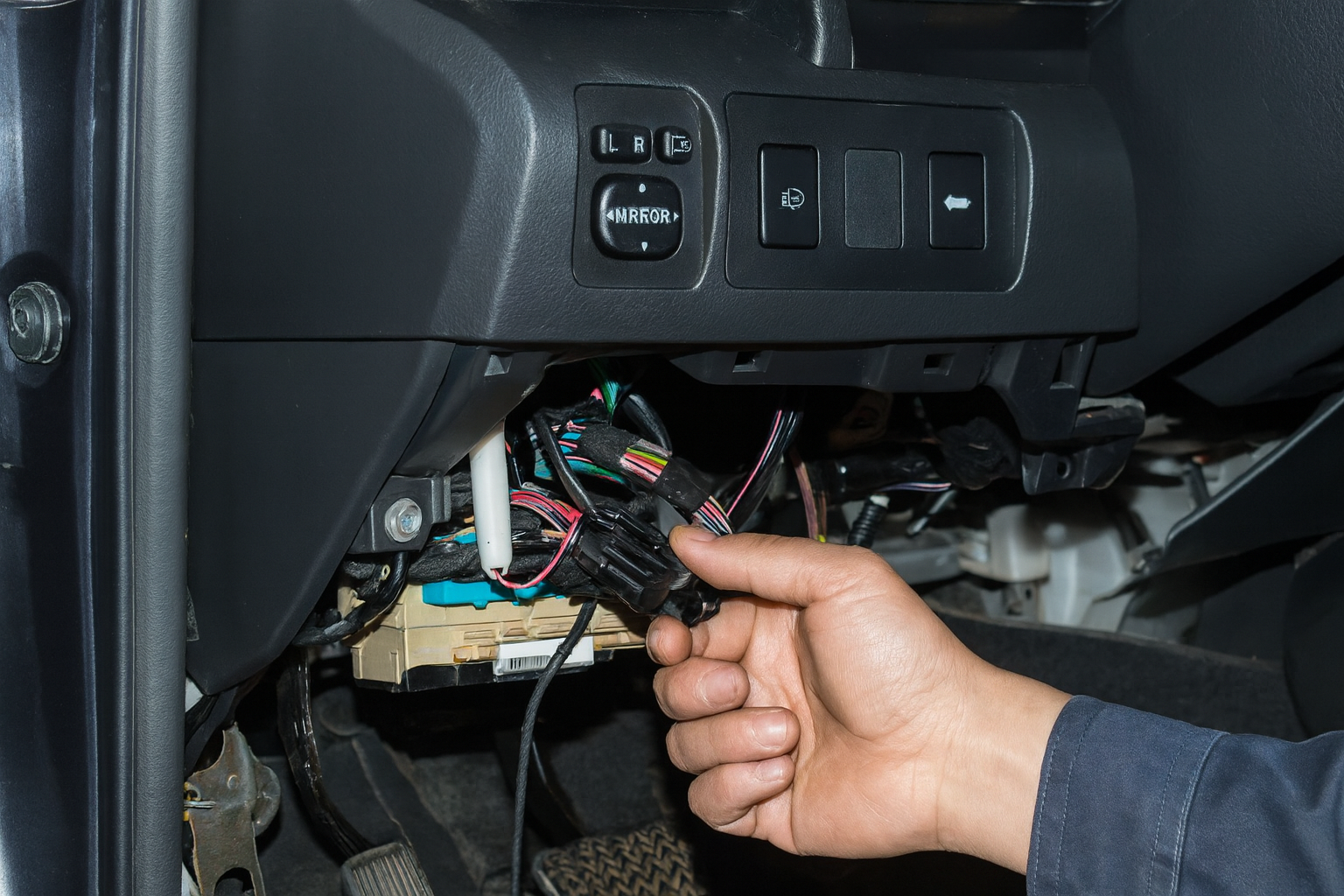
In the complex ecosystem of a modern vehicle, the wiring harness stands as the nervous system, responsible for transmitting power and data to every component—from the headlights to the central computer. A well-designed, robust harness is central to a car’s durability and compact structure. However, when this critical component fails, the consequences can range from minor accessory malfunction to complete vehicle shutdown.
Neglecting the routine inspection and maintenance of your vehicle’s wiring system can lead to frustrating and expensive repairs. This comprehensive guide will delve into the symptoms of a bad wire harness, explore the root causes of failure, and provide a detailed troubleshooting procedure to keep your vehicle functioning reliably.
The Function of the Wiring Harness
The primary role of the wiring harness is to organize and protect the multitude of wires and cables that power the vehicle’s electrical systems. It bundles these wires, often encased in durable tubing or tape, shielding them from environmental damage, heat, moisture, and abrasion.
The relevance of the wire harness has grown exponentially with the sophistication of modern automobiles. Advanced automated models transfer significant amounts of power and complex digital data from the battery to electronic control units (ECUs) and accessories. This necessity calls for a corresponding increase in the number of wires, making the harness a densely packed, mission-critical component.
Causes of Wiring Harness Failures
Harness resilience is dependent on its initial quality and its ability to withstand constant exposure to harsh operating conditions. Failures typically stem from environmental stress or assembly errors.
A. Wear and Tear and Environmental Factors
Loss of Flexibility: Over time, the harness material can wear and become rigid, particularly in the engine bay where temperatures fluctuate drastically. This stiffness compromises the harness’s ability to absorb shock and vibration.
Physical Damage: Extreme temperatures, humidity, moisture, and road vibrations can cause the protective tubing to stretch, crack, or break, exposing the bare electrical wires and terminals to the environment, leading to corrosion or short circuits.
B. Assembly and Manufacturing Errors
Mistakes during the assembly phase can predispose a harness to early failure:
Incorrect Electrical Wire Sizing: Using undersized wire for a high-current application leads to excessive resistance and overheating.
Unorganized Wiring Arrangements: Poor routing can cause wires to rub against sharp edges, chassis components, or moving parts, leading to insulation failure.
Faulty Crimping Methods: A weak or improperly executed crimp/solder joint is the primary cause of high resistance and intermittent connections at terminals, leading to premature failure under vibration.
Warning Signs (Symptoms) of Wiring Harness Failures
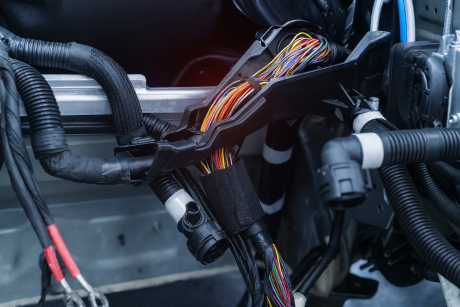
A failing wire harness rarely causes a sudden, total electrical collapse. Instead, it manifests as a series of intermittent and frustrating accessory or performance issues.
A. Accessory Failure
The most immediate and obvious sign is the random cessation of function in non-critical components. You may experience:
Non-working screen wipers or power windows.
Flickering or fused headlights/taillights.
A malfunctioning radio, central console display, or navigation system.
B. Battery Issues
Faulty wiring can severely disrupt the vehicle’s charging and power distribution cycle:
Inconsistent or Dead Battery: The harness may have an intermittent short or ground fault, causing a parasitic draw that drains the battery faster than usual, often leaving the battery unable to start the car despite showing a partial charge.
Lighting Anomalies: Faulty wiring prevents the system from distributing power correctly, causing vehicle lighting to dim or flicker erratically, most noticeable when the engine is first turned on.
C. Poor Engine Performance
Exposed or damaged sections of the harness, especially those connected to sensors (e.g., O2, MAF, Crankshaft Position), can cause significant motor disturbances:
Random Engine Working: The ECU receives erratic signals, leading to unexpected acceleration, deceleration, or unstable idling.
Driving Instability: These issues may manifest as jerking, stuttering, or lurching during driving, as the fuel-air mixture or ignition timing is randomly disrupted.
D. Electronic Issues
A disruption in data transmission is a critical warning:
Gadget Malfunctions: Any time data is lost, strange electrical phenomena or malfunctioning gadgets (even the center console) may occur.
Check Engine Light (CEL): The illumination of the CEL is a common symptom. A faulty or short-circuited sensor connection within the harness is often the root cause, triggering a diagnostic trouble code (DTC).
How to Identify a Bad Wire Harness (Troubleshooting Process)
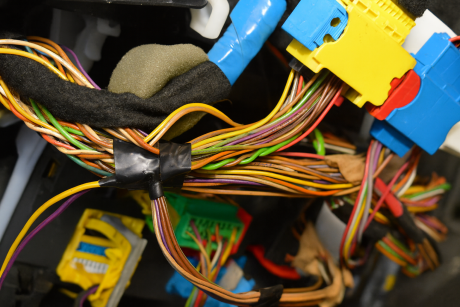
Identifying a faulty wire harness requires systematic testing using diagnostic tools.
| Step | Procedure and Goal | Required Tools |
| 1. Preliminary Inspection | Using the vehicle’s repair manual, locate the connectors and relays linked to the non-working components. Look for shared circuit points if multiple accessories are damaged. | Repair Manual |
| 2. Fuse Check | Check the relevant fuses using a test light to ensure a short circuit hasn’t blown them. Replace any damaged fuse and continue inspection. | Test Light |
| 3. Visual Inspection (External) | Expose the accessory wiring by removing interior trim panels. Inspect connections for corrosion or obvious signs of strain/abrasion. | None |
| 4. Visual Inspection (Internal) | Take the wires out of any tubing or sheathing. Carefully inspect points of stress (bends, sharp corners) for worn-out insulation exposing bare copper wire. | None |
| 5. Voltage and Grounding Test | Power the accessory and use the multimeter to check its voltage with and without a load. Significant voltage drop indicates high resistance, usually due to poor grounding or short-circuiting. | Multimeter |
| 6. Continuity Test | Check the continuity of current along the lengths of the wire using the multimeter’s Ohms setting. If the wiring is faulty (open circuit), the multimeter will display infinite Ohms or OL (Out of Limit). | Multimeter, Alligator Clips |
| 7. Repair/Replacement | After identifying the damaged segment or connection, decide whether to repair a single wire or replace the entire harness loop with a new, high-quality component. | Replacement Wire/Harness |
Prevention and Maintenance: Key to Avoiding Failure
Regular maintenance is the best defense against harness failure, especially for vehicles operating under harsh conditions.
Regular Inspections: Periodically inspect harnesses that face extreme circumstances (impact, flooding, tremors, power surges) for early signs of damage.
Mitigate Environmental Effects: Temperature changes cause wires to expand and shrink. As the temperature drops, condensation can form and trap moisture, leading to water damage and corrosion if drainage is poor.
Check Physical Connections: Vibrations and impacts can cause the crimping that holds the wires to the terminal assembly to become loose or dislodged, creating a weak point that must be checked.
Manufacturing High-Quality Wire Harnesses
The longevity of a harness starts with its creation. Manufacturers must adhere to strict quality controls to ensure reliability:
Pay Attention to Design: Accurate initial measurements are paramount to ensure correct fitment and alignment. Additionally, the wire size must satisfy the current and power demands of the application to prevent overcurrent and overheating.
Careful Manufacturing Process: Although machines fabricate harnesses, issues can arise from improper machine maintenance or inaccurate settings. Faulty wire layout and poor connection to the harness frame are significant causes of manufacturing errors.
Avoid Poor Quality Materials: Reliability is reduced when cost-saving measures lead to the use of inferior materials, such as copper alloy instead of OEM-grade copper. Equally crucial is the quality of the over-molding used to shield the electrical harness from the weather; poor design here leads to inadequate environmental protection.
Conclusion
A failing wire harness can quickly lead to an unusable vehicle. These critical problems often arise either from unaddressed manufacturing defects or the cumulative stress of long-term use. By remaining vigilant regarding the symptoms and implementing a structured troubleshooting procedure, vehicle owners and maintenance professionals can address issues promptly. For lasting reliability, partnering with a trustworthy supplier that ensures high-quality design, materials, and manufacturing—such as Cloom, which offers safe and dependable wiring harness and cable assembly solutions—is essential.
FAQs
1. What is the difference between a wire harness and a cable assembly?
While the terms are sometimes used interchangeably, technically:
Wire Harness: A bundle of individual wires, cables, or sub-assemblies held together by straps, clamps, or ties. It is designed to fit a specific geometric configuration, primarily focusing on organizing wires to simplify installation.
Cable Assembly: Usually involves only two or three electrical cables that are typically encased in a single, robust, protective sheath or tubing, often used when heavy-duty protection against harsh environments is required.
2. Can a failing wire harness affect my car’s fuel economy?
Yes, indirectly. If the harness supplying power or data to critical engine sensors (like the Oxygen Sensor, MAF sensor, or coolant temperature sensor) is faulty, the Electronic Control Unit (ECU) will receive incorrect readings. In response, the ECU may incorrectly adjust the fuel-air mixture, often defaulting to a richer (more fuel) mixture to protect the engine, which directly leads to decreased fuel efficiency and increased emissions.
3. Is it better to repair a wire harness or replace the entire unit?
The choice depends on the extent and location of the damage:
Repair is often suitable for: Minor localized damage, such as a single severed wire, minor abrasion, or a single faulty terminal/crimp connection in an easily accessible area.
Replacement is necessary for: Extensive damage across multiple wires, damage within a hard-to-access area (like inside the firewall), widespread corrosion, or when the harness insulation is brittle and cracking throughout its length. Replacement ensures long-term reliability.
4. Why are modern wire harnesses more susceptible to failure than older ones?
Modern vehicles have exponentially more complex electrical demands and fewer available mounting spaces. This leads to denser, more tightly packaged harnesses with more conductors, increasing the risk of:
Heat Buildup: Tighter packaging can trap heat.
Fretting Corrosion: Constant vibration between tightly packed wires can rub off insulation.
Signal Integrity Issues: Sensitive data wires are bundled near high-current power wires, increasing the chance of electromagnetic interference (EMI).
5. What does the “OL” reading on a multimeter during a continuity test signify?
The “OL” (Out of Limit) or “I” (Infinite) reading on a multimeter during a continuity test indicates infinite resistance. This confirms that the circuit is open (or broken). In a wire harness, this means the current is completely blocked, usually due to a fully severed wire, a completely failed terminal, or a loose connection within a connector plug.
6. How does poor-quality crimping lead to harness failure?
A poor crimp—where the wire and terminal are improperly joined—creates a point of high electrical resistance. This high resistance causes the connection point to heat up excessively, especially under load. Over time, this heat accelerates the degradation of the plastic connector housing and the wire insulation, eventually leading to a complete circuit failure, melting, or fire risk.
7. Can extreme cold weather cause wire harness failure symptoms?
Yes. In extreme cold, the plasticizers and compounds in the wire insulation and cable jackets can become brittle, losing their flexibility. This makes the harness much more vulnerable to cracking or shattering when subjected to normal vehicle vibrations or physical stress, potentially exposing the copper conductors. Additionally, cold can exacerbate issues related to trapped moisture and condensation, leading to corrosion at terminal pins.