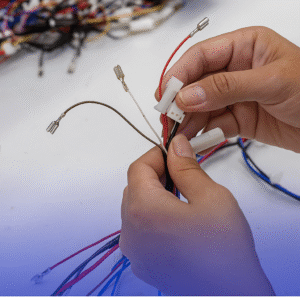

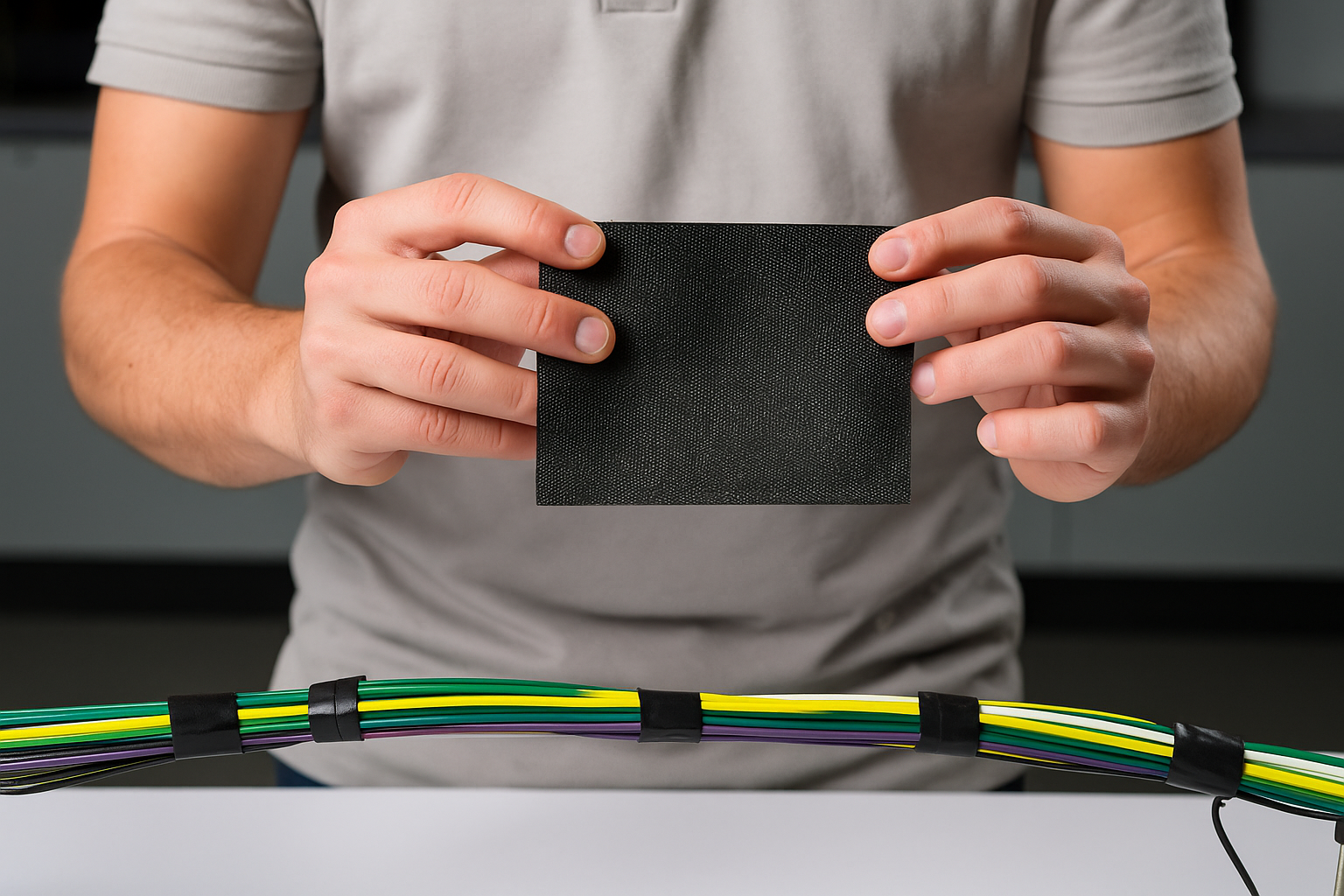
Why Wire Harness Protection Matters
Every modern vehicle — from compact electric cars to heavy-duty trucks — depends on a wire harness to connect electrical systems such as lighting, infotainment, sensors, and engine control modules.
However, these wires are exposed to heat, vibration, friction, fluids, and contaminants. Without adequate protection, insulation damage can cause:
Short circuits
Malfunctions of safety systems (ABS, airbags)
Fire risks or electrical failures
To prevent these problems, engineers must bundle and protect wire harnesses using materials that balance flexibility, protection, and cost efficiency. While zip ties, plastic conduits, and heat shrink tubing are common, cloth tapes have emerged as a highly effective, versatile, and lightweight bundling solution in modern automotive wiring.
Understanding Cloth Tape for Wire Harnesses
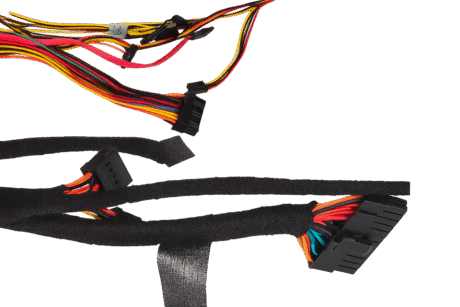
Understanding Cloth Tape for Wire Harnesses
Cloth tapes are woven or nonwoven fabric-backed adhesive tapes designed for bundling and protecting cables. Their main advantages include:
High flexibility for wrapping irregular harness shapes
Excellent abrasion and noise damping properties
Lightweight and cost-effective compared to conduits or tubing
Cloth tapes can provide sound dampening, electrical insulation, and abrasion resistance depending on their adhesive and backing combination. They also allow manual or automated wrapping, making them suitable for both small-scale repairs and mass production lines.
Key Application Areas of Cloth Tapes
In automotive manufacturing, cloth tapes are used across multiple vehicle zones:
| Application Area | Function |
| Interior cabin | Reduces noise, vibration, and harshness (NVH) levels; provides aesthetic bundling for visible wires. |
| Door panels and dashboards | Prevents rattling noises and abrasion where wires move slightly. |
| Engine compartment | Withstands extreme heat (up to 200°C), protects against oil and fuel contamination. |
| Chassis and underbody | Offers strong mechanical and chemical protection against debris and road salt. |
Even with automation in wire harness assembly, many manual wrapping steps remain necessary, particularly in complex routing zones or near connectors.
Types of Adhesives Used in Cloth Tapes
The adhesive layer is the functional heart of any cloth tape. It determines how securely the tape adheres under temperature, vibration, and contamination. Common types include:
1. Rubber Adhesive
Excellent initial tack and flexibility
Moderate temperature resistance (up to 90°C)
Ideal for interior and cabin applications
2. Acrylic Adhesive
High long-term stability and UV resistance
Performs well under temperature fluctuations (-40°C to 150°C)
Suitable for both interior and under-hood applications
3. Silicone Adhesive
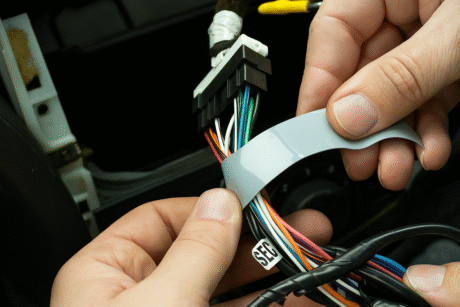
Silicone Adhesive
Outstanding high-temperature performance (up to 200°C)
Resistant to oil, coolant, and other automotive fluids
Preferred for engine bay or transmission wiring
4. Self-Fusing Silicone and Rubber Tapes
Contain no adhesive layer — instead, they bond to themselves under tension
Create a watertight, chemical-resistant seal
Ideal for emergency repairs and temporary insulation
Selecting the right adhesive requires matching the tape’s temperature and chemical resistance to the specific environment of the wire harness.
Types of Tape Backing Materials
While adhesives bond the tape to wires, backing materials provide physical and environmental protection.
1. PVC (Polyvinyl Chloride)
The most common automotive tape backing
Highly flexible, abrasion-resistant, and easy to hand-tear
Suitable for general bundling and insulation tasks
2. Polyester (PET)
Superior abrasion resistance and thermal stability
Flexible and hand-tearable for ease of installation
Often used for under-hood or high-vibration applications
3. Glass Cloth
Withstands extreme temperatures up to 250°C
Excellent flame resistance and mechanical strength
Common in high-performance and heavy-duty engine compartments
4. Nonwoven Fleece (PET Felt)
Used primarily for noise dampening and vibration reduction
Offers a soft texture and is ideal for interior harness wrapping
Combining different backings and adhesives allows engineers to customize the durability, flexibility, and cost-efficiency of their harness designs.
What Makes a Great Vehicle Wire Harness Tape
A. Tight Wrapping Capability
A good wire harness tape must conform tightly to bundles without wrinkling.
PVC and polyester tapes excel here due to their elasticity and form-fitting ability, allowing efficient routing through confined spaces.
B. Abrasion Resistance
Abrasion resistance is rated from Class A (lowest) to Class F (highest) under ISO 6722 standards.
Class A: <100 cycles
Class F: >15,000 cycles
High-class cloth tapes ensure durability in environments exposed to vibration or moving parts.
C. Heat and Electrical Insulation
Proper insulation prevents overheating or short circuits.
PVC – good general-purpose insulation
Glass cloth & PET – ideal for high-temperature zones
Adhesive stability is equally important — the tape should not delaminate or ooze under heat.
D. Resistance to Chemicals and Contaminants
Tapes used near engines or transmissions must resist oils, coolants, and fuels.
Woven and smooth polymer coatings improve fluid resistance
Flame-retardant and waterproof coatings can be added for extra protection
Step-by-Step Guide to Wrapping Wire and Cable Harnesses
Step 1: Choosing the Right Tape
Ask yourself:
What’s the purpose — noise reduction, insulation, or mechanical protection?
Which environment — interior, chassis, or engine bay?
Is EMI shielding or heat protection needed?
Step 2: Estimating Tape Quantity
For a 50% overlap wrapping pattern, the tape length required per linear foot of cable depends on cable diameter.
| Cable Diameter (mm) | Tape Width (mm) | Approx. Tape Length (per ft) |
| 5 | 19 | 0.25 m |
| 10 | 19 | 0.50 m |
| 20 | 25 | 1.00 m |
Avoid using overly wide tape to save material — this can lead to wrinkles and uneven coverage.
Step 3: Installation Technique
Start wrapping at a 75° angle to the cable axis.
Maintain 50% overlap for consistent coverage.
Avoid overstretching polymer tapes to prevent peeling.
For multi-branch harnesses:
Wrap smaller breakout legs first using narrow tape.
Then wrap the main trunk with wider tape.
Secure tape ends using fiberglass string or cable ties to prevent unraveling.
Common Mistakes and Best Practices
| Mistake | Consequence | Best Practice |
| Overstretching elastic tapes | Wrinkling and adhesive exposure | Maintain moderate tension |
| Using wrong adhesive type | Poor adhesion or insulation failure | Match adhesive to environment |
| Ignoring overlap consistency | Uneven protection | Maintain 50% overlap |
| Leaving ends unsecured | Tape unravels over time | Tie or heat-seal ends |
For automated production, tape wrapping machines ensure consistent coverage and tension, improving harness uniformity.
Conclusion
While cloth tapes may seem simple, they play a critical role in wire harness performance and durability. Their lightweight nature, superior flexibility, and sound-dampening ability make them a preferred solution for modern vehicle wiring systems.
However, because tape wrapping is labor-intensive, it’s best reserved for short harness lengths or complex sections. For longer runs, zip-on jackets or braided sleeves may be more cost-effective.
By selecting the right combination of adhesive, backing, and installation technique, engineers can ensure that every harness remains safe, durable, and efficient throughout the vehicle’s lifespan.
FAQs
1. What is the main difference between cloth tape and PVC electrical tape?
PVC tape focuses on insulation, while cloth tape offers superior abrasion and noise reduction — ideal for automotive harnesses and dynamic areas.
2. Can cloth tape handle engine bay temperatures?
Yes. With proper backing (like polyester or glass cloth) and heat-resistant adhesive, cloth tape can endure up to 200°C.
3. Does cloth tape absorb moisture?
High-quality automotive-grade cloth tapes have water-repellent coatings to prevent moisture absorption and corrosion.
4. Is cloth tape suitable for outdoor or underbody applications?
Yes, but only if it includes flame-retardant and chemical-resistant coatings to withstand road debris and fluids.
5. How long does a cloth-wrapped wire harness last?
When applied correctly, a high-quality cloth tape can last 10+ years, equivalent to a vehicle’s lifespan, without losing adhesion or flexibility.